Salt-Damaged Plaster Repair St George
Take off the plaster the salt has ruined and finish with a render designed for damp-affected walls.
Salt-damaged plaster repair is the last stage of fixing a damp wall, and the one you’ll notice most. When water rises through brick, it brings salts out of the ground and the masonry. As the water evaporates from the wall surface, the salts stay behind in the plaster. They keep drawing moisture from the air even after the damp course is fixed, so the paint keeps bubbling and the plaster keeps breaking down.
That’s why every damp quote we write includes replacing the damaged plaster. Without it, a successful damp course can look like it hasn’t worked.
What salt damage looks like
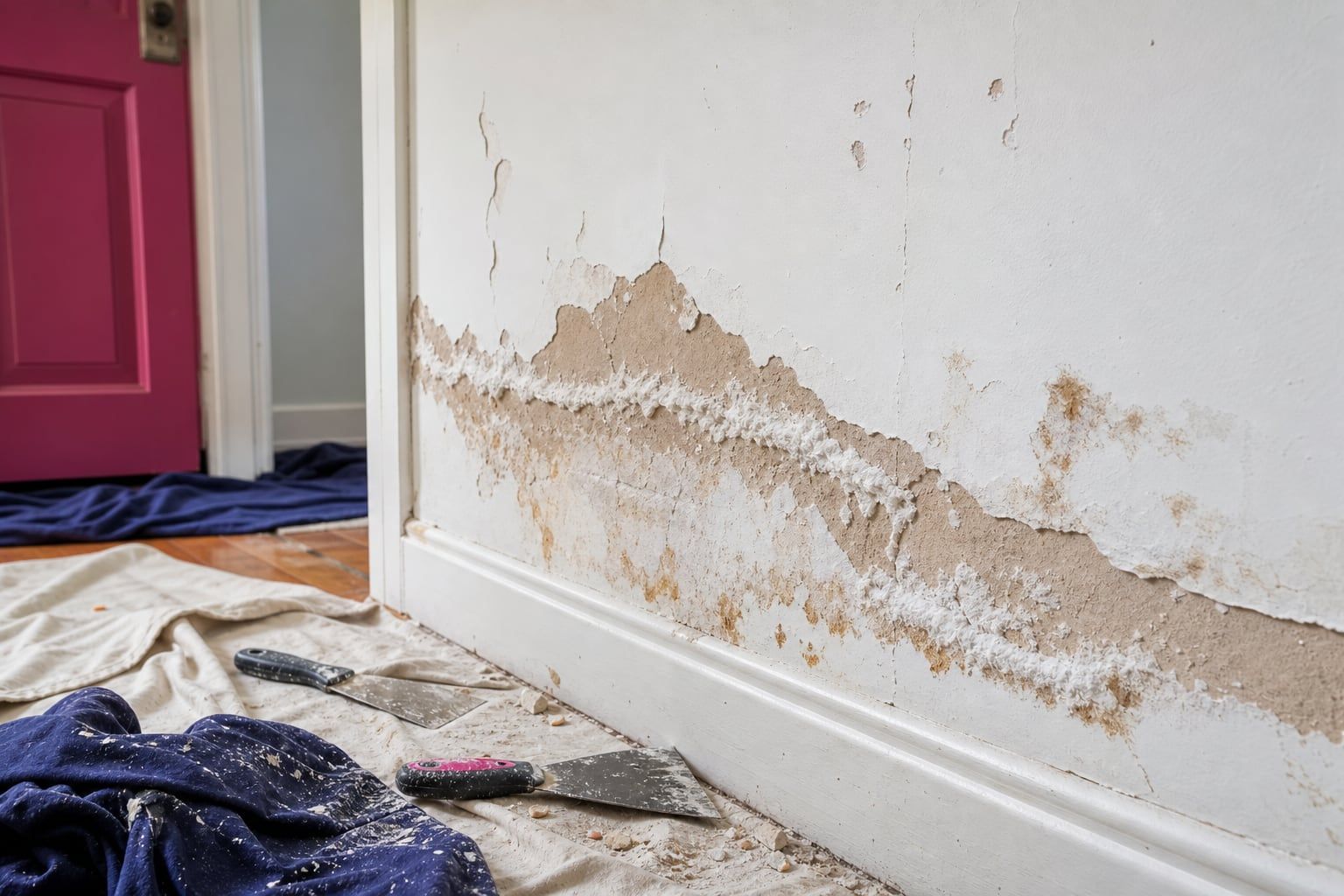
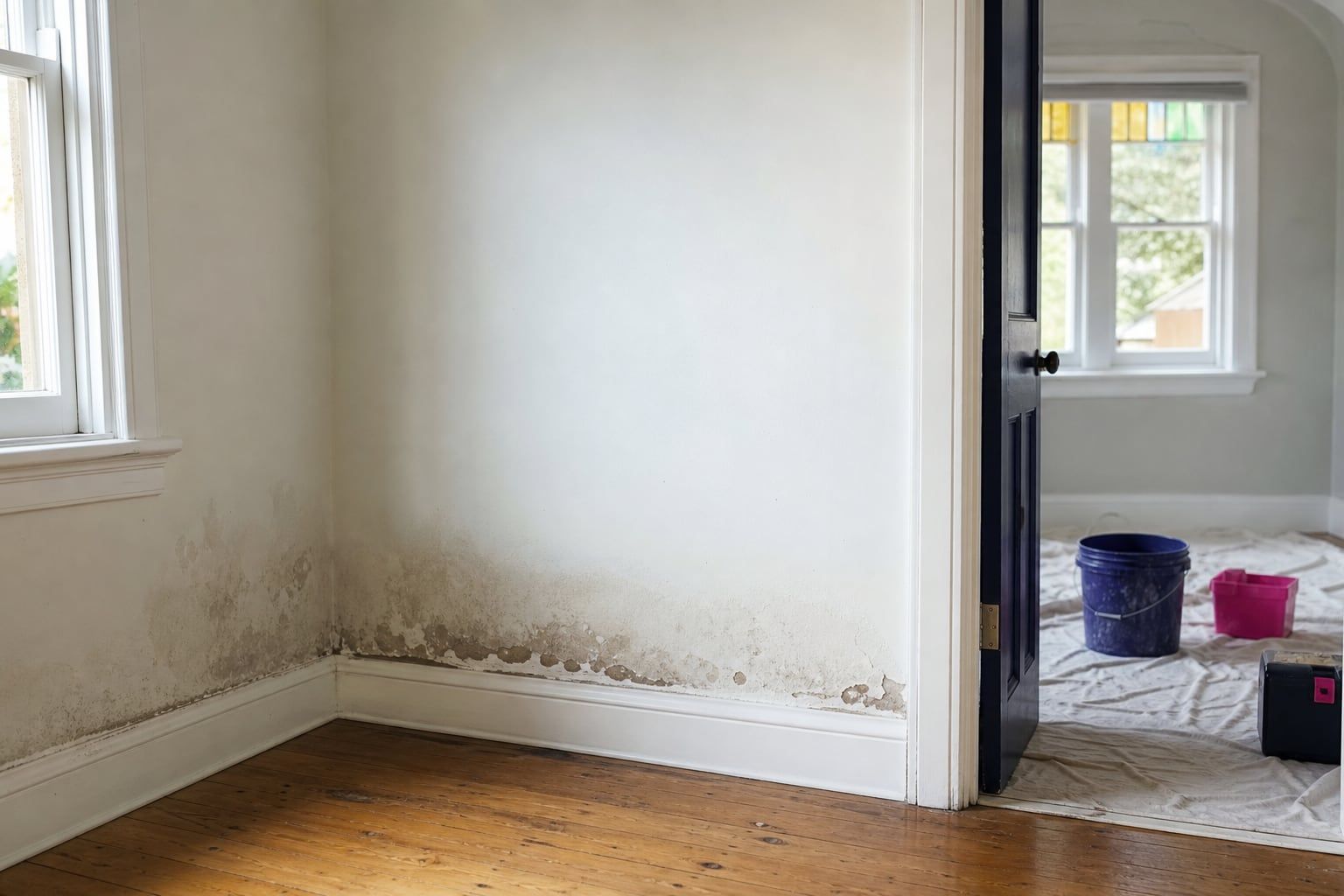
Look for paint blistering or flaking in a band near the floor, white fluffy or powdery crystals on the surface, plaster that crumbles or sounds hollow when tapped, a brownish tide mark, and skirtings that are soft or rotting behind the paint. In older homes the plaster can turn soft and sandy. Our page on symptoms of rising damp shows each one.
How we repair it
Find how far it’s gone. Salt usually travels higher than the visible damage. We test above the tide mark before deciding where to cut, so none is left behind to attack the new finish.
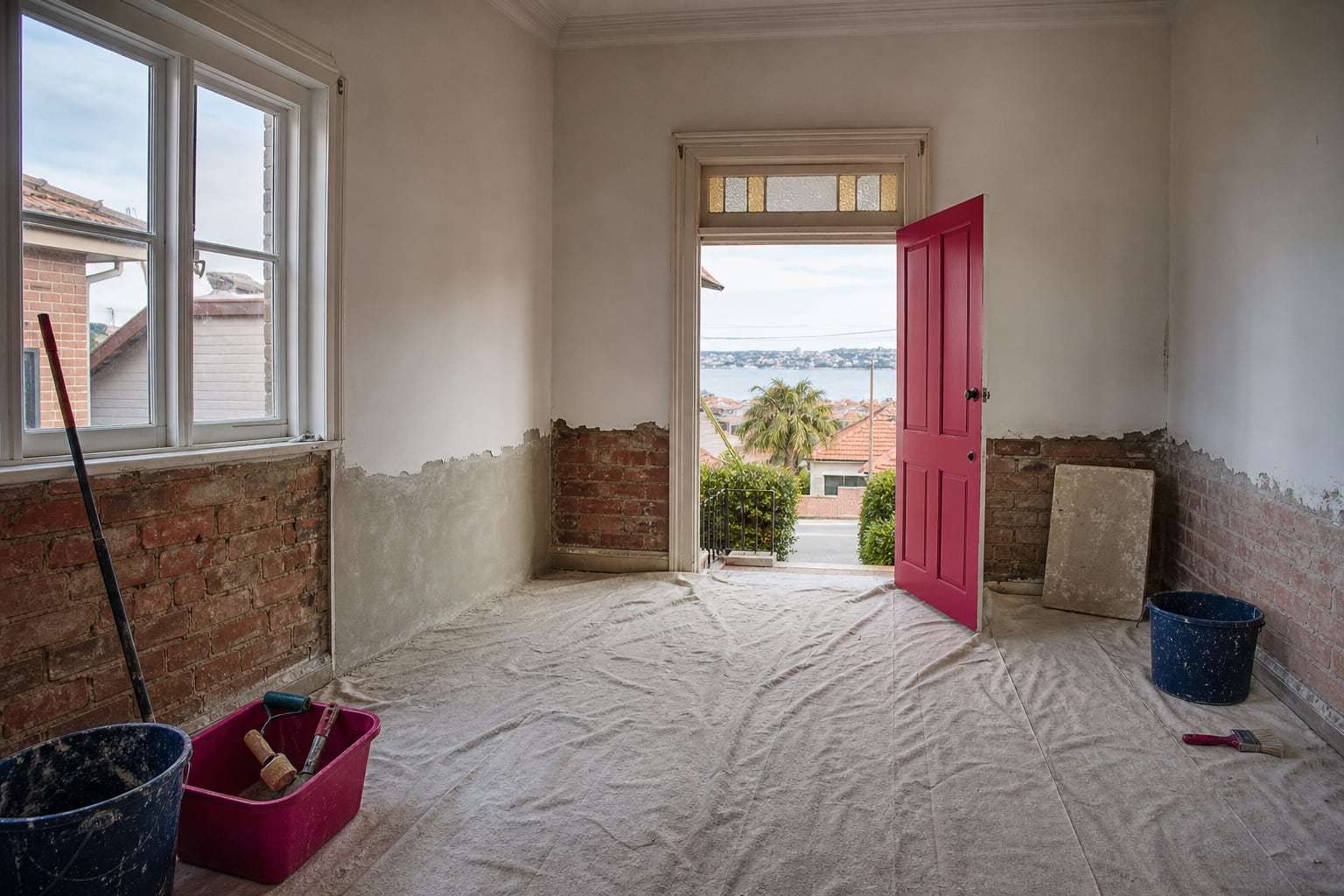
Strip it off. All the contaminated plaster is removed back to brick, cut in a straight line above the highest salty point.
Let the wall dry. The bare brick needs time to dry after the damp course or drainage has gone in. A single brick internal wall dries much faster than a thick double brick external wall.
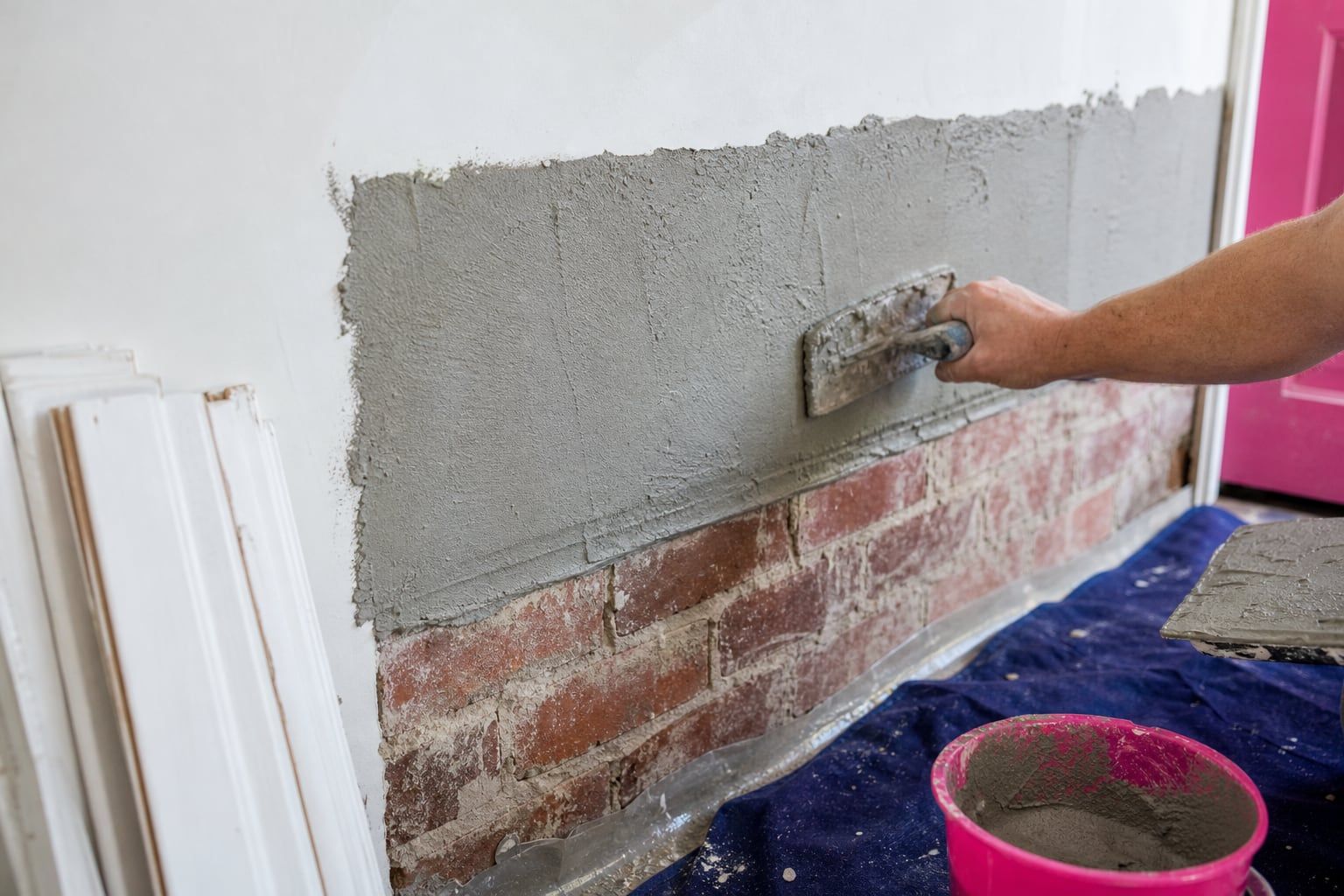
Render with a salt-tolerant system. The new finish is a breathable render designed for walls that have had rising damp. It lets the wall keep drying while holding remaining salt within the render, away from the paint. It’s finished smooth to match the rest of the room.
Only after the cause is fixed
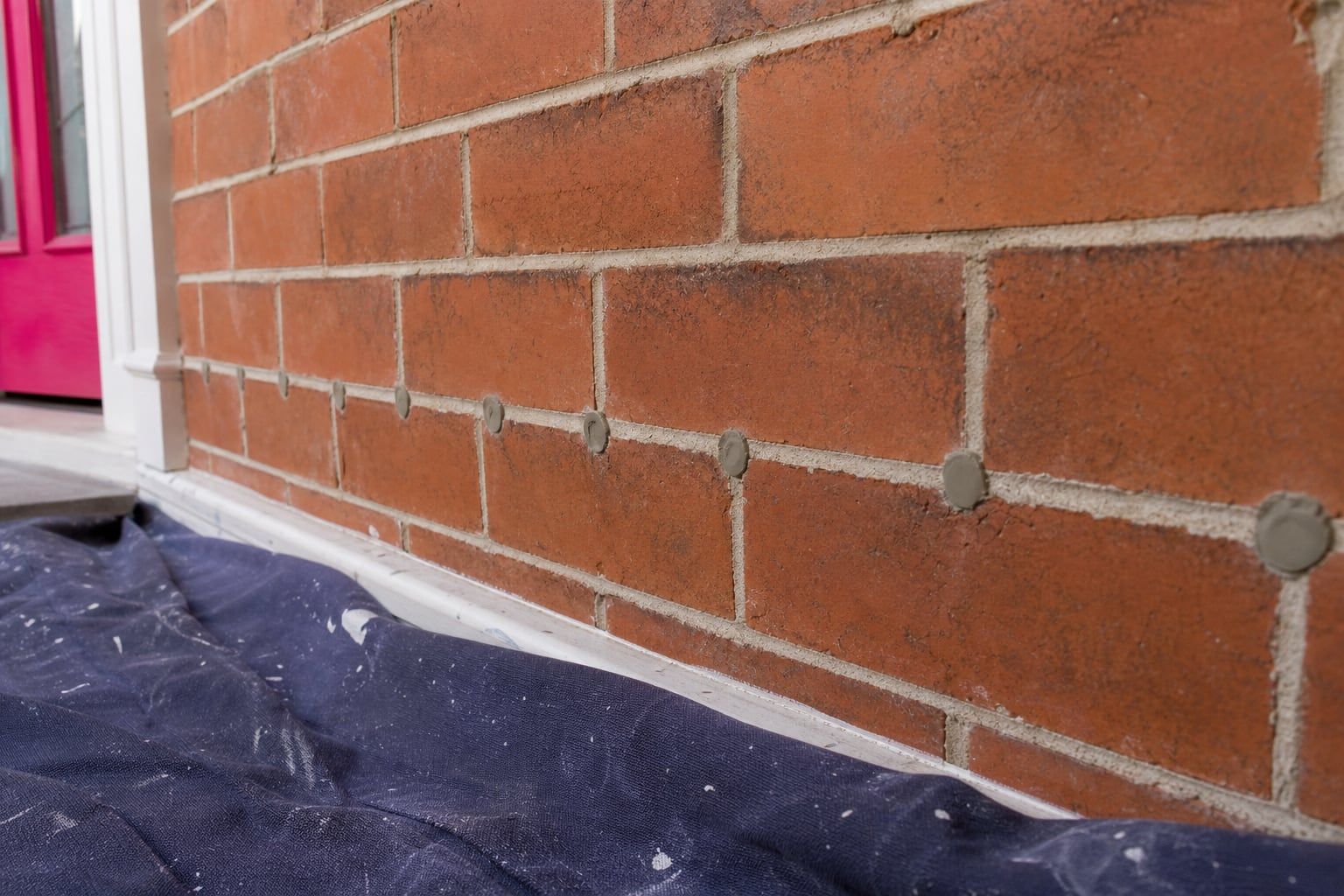
Plaster repair has to come after the water is stopped. If the wall is still getting wet, new render fails the same way the old plaster did. So the repair always follows an injected damp course, a damp course membrane, drainage or subfloor work, whichever the inspection showed was needed.
Skirtings and finishes
Rotten skirtings are replaced, with profiles matched where possible on older homes. Power points and fittings removed for the work are refitted. We’ll also recommend a breathable paint, because standard acrylic paints form a tight skin that slows drying on a wall that’s recently been damp.
Brick veneer homes
In brick veneer houses, the internal walls are usually plasterboard on a timber frame rather than plaster on brick. Damp there behaves differently, and plasterboard damaged by damp is replaced rather than re-rendered. Our guide to damp in brick veneer homes explains when that happens.
How long the repair takes
Stripping a room usually takes a day. Drying time varies most: a thin internal wall can be ready for render in a few weeks, while a thick external double brick wall takes longer. Render itself goes on in a day or two per room, then needs to cure before paint. We plan rooms in sequence so the whole house isn’t out of action at once, and the written quote sets out the expected timing.
Part of every quote
Keeping it in the same quote as the damp course means one team is accountable for the whole result, from the barrier in the wall to the finish you paint.
The plaster repair is included in every rising damp treatment quote, priced wall by wall, so the price covers a finished wall you can paint.
Updated
What good salt-damaged plaster repair looks like
Salt-Damaged Plaster Repair across St George
Salt-Damaged Plaster Repair in St George: step by step
- Find the limitWe test above the visible damage to see how high the salt has really reached.
- StripAll salt-loaded plaster comes off back to brick, in a clean line above the highest salty point.
- Dry outThe wall is left to dry for a period that suits its thickness.
- RenderA breathable, salt-tolerant render is applied and finished ready for paint.
Salt-Damaged Plaster Repair questions in St George
Something else on your mind? Call and ask.
Why does the new paint keep bubbling?
Salt in the plaster draws moisture out of the air and crystallises behind the paint. Until the salty plaster is removed, new paint will keep failing.
Can I use plasterboard instead?
On a wall that's been damp, plasterboard fixed directly over brick can trap moisture and grow mould behind it. A salt-tolerant render is a more reliable finish on solid brick.
How long before I can paint?
The render needs to cure, and the wall behind it needs to have dried enough. We'll tell you when it's ready and recommend a breathable paint.