Damp in brick veneer homes: weep holes, garden beds and the timber frame
How brick veneer houses handle water, why they get damp when weep holes are covered, and what keeps the timber frame dry.
Damp in brick veneer homes works differently from damp in older solid brick houses. Brick veneer took over in St George from the 1960s, and a large share of homes in Penshurst, Mortdale, Peakhurst, Beverly Hills, Kingsgrove, Lugarno and Riverwood are built that way. They’re generally good at keeping water out. But when certain things go wrong, usually things added after the house was built, water gets to the part that matters most: the timber frame.
How brick veneer is built
A veneer house is really a timber-framed house with a single skin of brick on the outside. The frame carries the roof and the internal walls are plasterboard fixed to it. Between the frame and the brick is a cavity, usually around 40 to 50 millimetres wide.
The brick skin is there for weather protection and looks. It gets wet in rain, and some water passes through to the cavity. That’s expected. The cavity stops it reaching the frame, and at the bottom of the brick skin there are weep holes, small open gaps in the mortar every so often, that let any water in the cavity drain back out. Flashings at the base direct water outward toward them.
The timber bottom plate of the frame sits on the slab or the floor framing, above the level where water collects in the cavity.
How veneer homes get damp
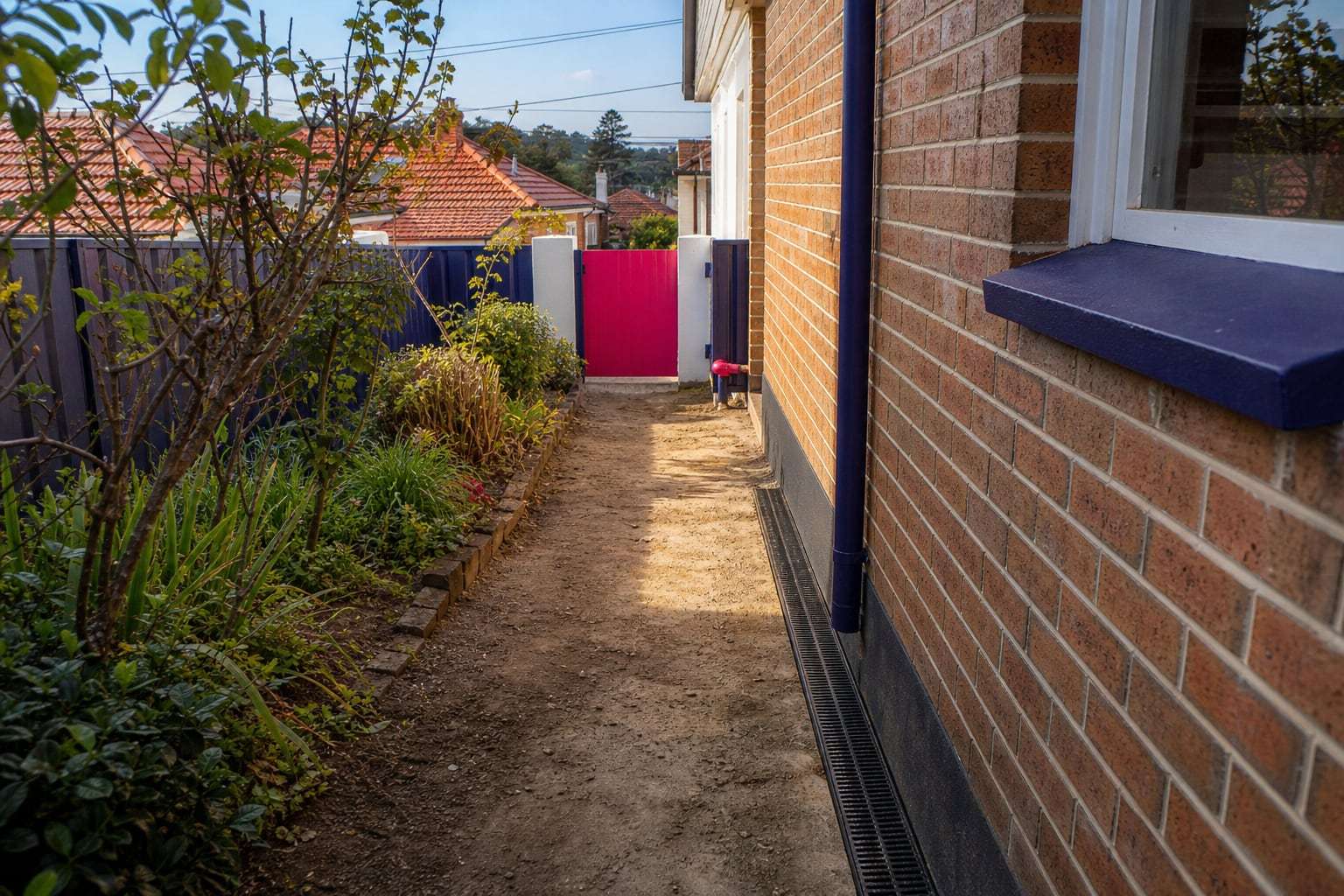
Covered weep holes. This is the most common problem we see. Garden beds are built up against the house, mulch is piled high, paths and patios are laid over the bottom course, or the base of the wall is rendered. Each one blocks the weep holes. Water that gets into the cavity can’t drain out, so it builds up, and once it rises above the flashing it can reach the bottom plate.
Raised ground. Even without covering weep holes, soil or paving built up against the brick puts water directly against the wall and makes the cavity wetter.
Bridged cavities. Mortar droppings left in the cavity during construction, or debris that falls in later, can pile up and bridge the gap between the brick and the frame, giving water a path across.
Failed flashings. Damaged or poorly lapped flashings at the base of the wall, around windows or at the junction with additions let water get in behind them.
Wet subfloors. Veneer houses on piers with timber floors can have damp crawl spaces, with blocked vents and wet soil keeping the frame and floor timbers damp.
Signs to look for
Because the inside walls are plasterboard, damp in a veneer house doesn’t look like the classic tide mark on plaster. Look for skirtings that are swelling, soft or coming away; plasterboard that’s stained, soft or crumbling near the floor; mould along the bottom of walls or inside wardrobes on external walls; carpet that’s damp at the edges; and a musty smell. Outside, look for weep holes you can’t see, and garden beds or paving level with or above the bottom few courses of brick.
Why it matters
The brick skin can stay damp for years without much harm. The timber frame can’t. Timber that stays wet is at risk of decay and is more attractive to termites. Plasterboard that gets wet loses its strength and grows mould. By the time the damage shows inside, the bottom plate may have been wet for a long time.
Fixing a damp veneer house
Uncover the weep holes. Lower garden beds, rake back mulch, and cut back paving so the bottom courses and weep holes are fully clear. Keep the ground at least a couple of brick courses below the weep holes where possible.
Clear blocked weep holes. Weep holes filled with mortar, render or debris can be cleared. Weep hole covers keep insects out without blocking drainage.
Fix drainage. Make sure the ground falls away from the house, downpipes are connected and paths don’t drain toward the walls. Our page on damp wall drainage explains the options.
Ventilate the subfloor. On veneer homes with timber floors, clearing and adding vents or fitting fans dries the crawl space. See subfloor ventilation.
Repair the damage. Once the water is dealt with, swollen skirtings and damaged plasterboard are replaced, and any decayed framing needs assessing by a builder.
What doesn’t help
Injecting a chemical damp course into the outer brick of a veneer house rarely solves damp inside, because the brick isn’t the problem. Sealing or rendering over the bottom courses makes things worse by blocking the weep holes. And painting over stained plasterboard just hides the problem.
Solid brick houses are different
Older St George homes built before veneer became common are usually solid or double brick, with plaster on the inside face of the masonry. Those houses can have true rising damp that does need a barrier. Our page on rising damp treatment explains how we tell the two apart.
Getting it checked
We look at the weep holes, ground levels, drainage and subfloor, take readings on the affected walls and tell you what’s going on. Our page on rising damp symptoms shows what to look for, and our overview of St George rising damp explains how we work.
Updated
Damp in brick veneer homes: common questions
Something else on your mind? Call and ask.
Do brick veneer homes need a damp course?
They usually have one in the brick skin, but the key protection is the cavity and the weep holes. As long as water in the cavity can drain out and the frame sits above it, the timber stays dry.
How can I tell if my house is brick veneer?
Knock on an inside external wall. A hollow sound usually means plasterboard on a timber frame, which suggests veneer. Solid brick sounds dense. Weep holes in the bottom course of the outer bricks are another clue.
Is mould inside a veneer wall serious?
It can be, because it often means the frame or plasterboard has been wet for some time. Find and fix the water source, then have the damaged timber and plasterboard assessed and replaced where needed.
Waterproof Tanking and Drainage in St George
More guides for St George homeowners
- Rising damp near Botany Bay: sandy ground and high water in bayside St GeorgeWhy older brick homes on the sandy, low ground around Botany Bay are prone to rising damp, and how to protect them.
- Damp in fibro cottages: subfloors, piers and asbestos safety in St GeorgeWhy post-war fibro and weatherboard cottages get damp underneath, what it does to the floor and frame, and how to fix it safely.