Damp in fibro cottages: subfloors, piers and asbestos safety in St George
Why post-war fibro and weatherboard cottages get damp underneath, what it does to the floor and frame, and how to fix it safely.
Damp in fibro cottages is common across St George. After the Second World War, thousands of small fibro and weatherboard homes went up across Penshurst, Mortdale, Peakhurst, Beverly Hills, Kingsgrove, Riverwood, Lugarno and the streets around Hurstville. Many are still standing, some renovated, some largely original. Most sit on brick or timber piers with a timber floor over a crawl space, and that’s where their damp problems start.
How fibro cottages are built
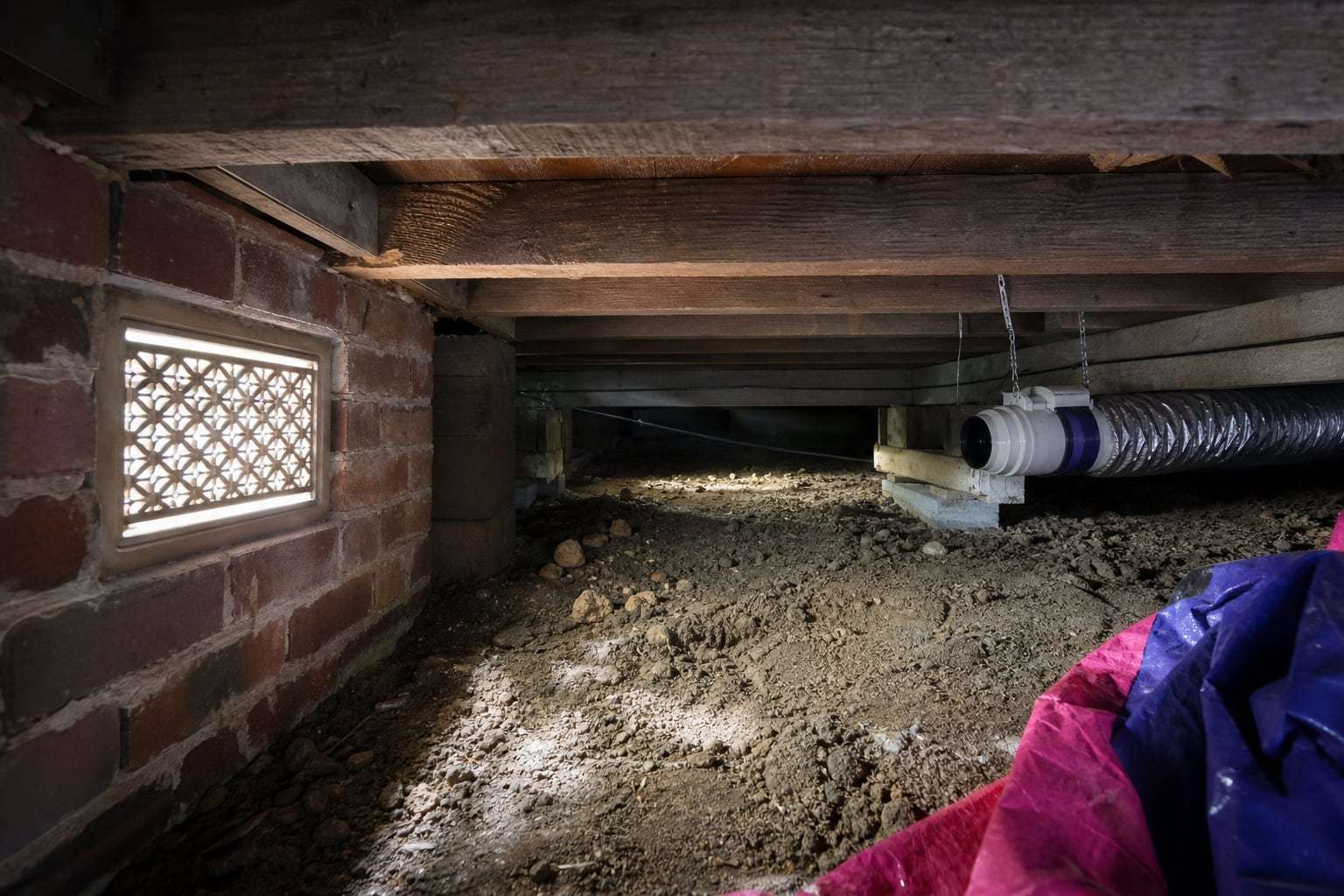
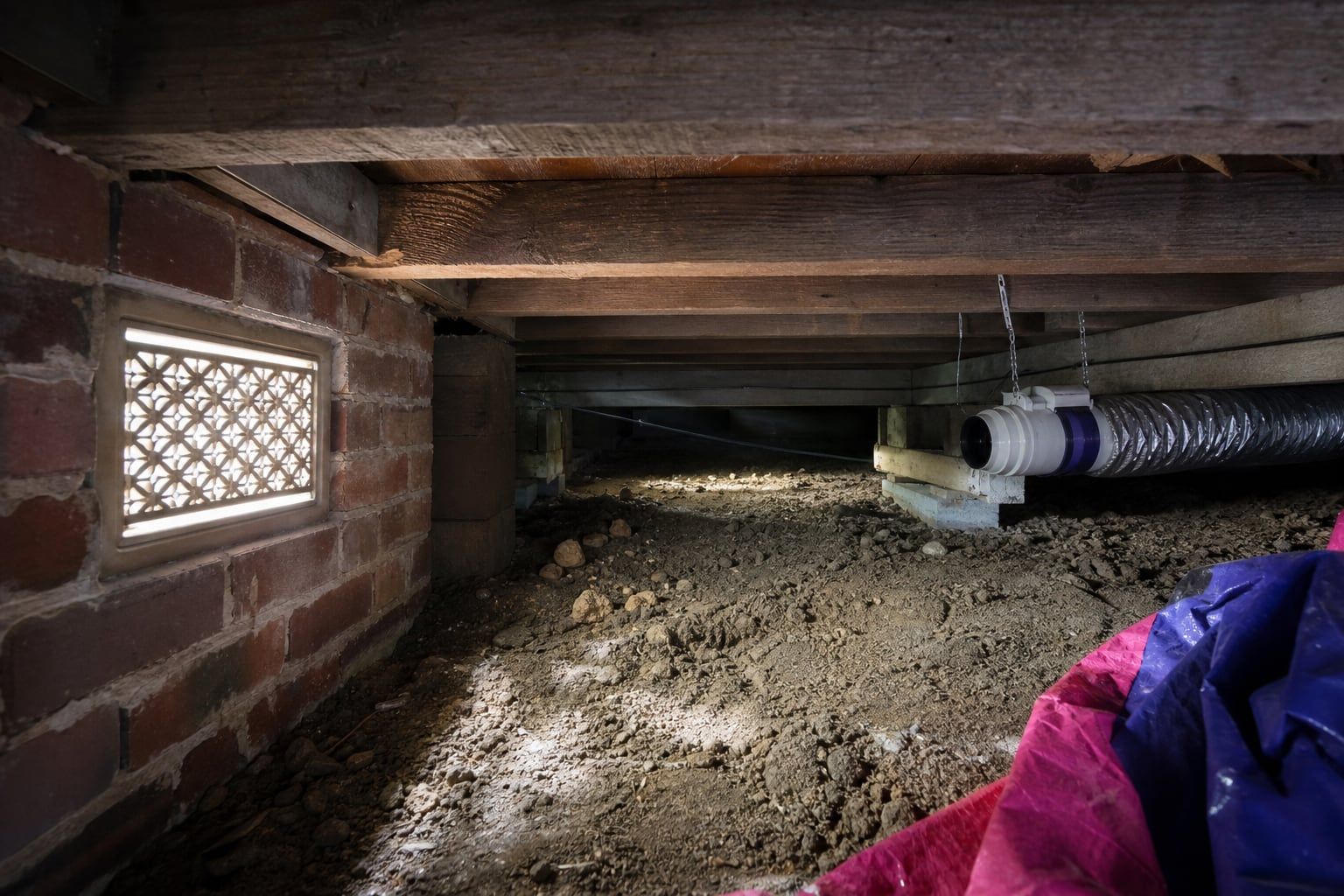
A typical post-war fibro cottage has a timber frame clad in fibrous cement sheeting, sometimes with weatherboard or a brick base. The floor is timber boards on joists and bearers, supported on piers. Around the edge there’s often a short brick or fibro base wall with vents to let air through the crawl space.
The walls don’t sit on the ground, so they can’t draw water up the way a solid brick wall does. What keeps the house dry is the subfloor: air moving through it and the ground underneath staying reasonably dry.
Why they get damp underneath
Vents get covered. Over seventy-odd years, vents disappear. Garden beds are built against the base, back extensions are added on slabs, verandahs are enclosed, decks are built over the front, and old vents are painted over or blocked with debris. Without vents, the crawl space becomes still and humid.
Water gets under. Downpipes empty onto the ground beside the house. Garden beds slope toward the walls. On sloping blocks, rain runs under the house from the high side. Leaking taps and pipes drip onto the soil.
Low clearance. Many cottages sit close to the ground, with little room for air to circulate.
Clay and low ground. Parts of the area sit on clay that holds water, and the low ground near creeks and the river stays damp longer after rain.
Signs of a damp subfloor
Inside, look for a musty smell, especially in winter; floorboards that cup, bounce, squeak or feel soft; mould on the backs of wardrobes and furniture on outside walls; and damp patches or peeling paint near the floor. Outside, check whether the vents are visible and clear, and where the downpipes go.
Under the house, wet or dark soil, mould on timber, rust on fixings and a strong earthy smell confirm it. Timber moisture readings tell us whether the bearers and joists are at risk of decay.
What damp does to the house
Floor timbers that stay damp can decay, starting with the bearers and joists closest to the ground and the outside walls. Damp timber also attracts termites. Brick piers and base walls can draw up water and pass it to the timber sitting on them. The bottom plates of the wall frames can rot where they’re closest to the damp.
Asbestos safety
Fibro sheeting made before about 1990 commonly contained asbestos. In good condition and left alone, it’s generally considered low risk. The danger comes when it’s cut, drilled, sanded, broken or water-blasted, which releases fibres.
That affects how damp work is done. We don’t cut new vents into old fibro sheeting or drill it. New vents go into brick base walls or existing openings, and fans are mounted under the floor without disturbing the cladding. If any old sheeting needs to come off, it must be removed by a licensed asbestos removalist first. SafeWork NSW has guidance for homeowners.
How to dry a fibro cottage out
Stop the water. Connect downpipes to drainage, lower garden beds and soil against the base, fix leaking plumbing, and on sloping blocks consider a drain on the uphill side. Our page on tanking and drainage explains drainage options.
Restore airflow. Clear blocked vents, remove stored items and debris from under the house, and add vents in brick base walls or existing openings so air can cross the subfloor.
Add fans if needed. In low or sheltered subfloors, quiet inline fans pull air through on a set path. See subfloor ventilation.
Check the timber. Once the subfloor is drying, any decayed bearers, joists or bottom plates should be assessed by a builder and replaced where needed. A pest inspection for termites is worthwhile too.
Treat brick base walls if they have rising damp. Where a brick base wall shows true rising damp, it may need a damp course of its own. Our page on rising damp treatment explains how we decide.
Renovating
If you’re renovating a fibro cottage, sort out the subfloor before new floors, kitchens or bathrooms go in. And plan around the vents: extensions and decks are the most common reason these houses lose their airflow.
Getting it checked
We get under the house, measure soil and timber moisture, check every vent and drainage point, and explain what’s needed. Our page on rising damp symptoms shows what to look for inside, and our overview of St George rising damp explains how we work.
Updated
Damp in fibro cottages: common questions
Something else on your mind? Call and ask.
Does my fibro cottage contain asbestos?
Fibro sheeting made in Australia before about 1990 commonly contained asbestos. You can't tell by looking. If it's undisturbed and in good condition it's generally low risk, but don't cut, drill, sand or water-blast it. A licensed assessor can test a sample.
Can a fibro house have rising damp?
Fibro and timber walls don't draw water up the way brick does. But brick piers and base walls can, and a damp subfloor keeps the floor framing and the bottom of the walls wet.
Should I replace the fibro to fix the damp?
Usually not. Most damp in fibro cottages comes from the subfloor and drainage, which can be fixed without touching the cladding. Any fibro removal must be done by a licensed asbestos removalist.
Subfloor Ventilation in St George
More guides for St George homeowners
- Damp in brick veneer homes: weep holes, garden beds and the timber frameHow brick veneer houses handle water, why they get damp when weep holes are covered, and what keeps the timber frame dry.
- Rising damp near Botany Bay: sandy ground and high water in bayside St GeorgeWhy older brick homes on the sandy, low ground around Botany Bay are prone to rising damp, and how to protect them.